The physics is old. Nobody had made it work on a yacht.
The Magnus effect has been understood since the nineteenth century: a spinning cylinder moving through water generates force perpendicular to the flow. Engineers have known this for generations.
What did not exist was a company willing to develop that principle into a reliable, commercial yacht stabilizer, patent it, and stand behind it for a decade and a half. We are the original inventors who brought the Magnus effect to the yachting world.
The physics behind the rotorsThe road here
2011
RotorSwing Marine is founded by Theo Koop, near Altena. The first product is a rotor stabilizer for use while cruising: the RS 140. It sells the same year.
2012
First yard collaboration, with Linssen Yachts. Working alongside a builder rather than refitting after the fact changes how the systems are engineered.
2014
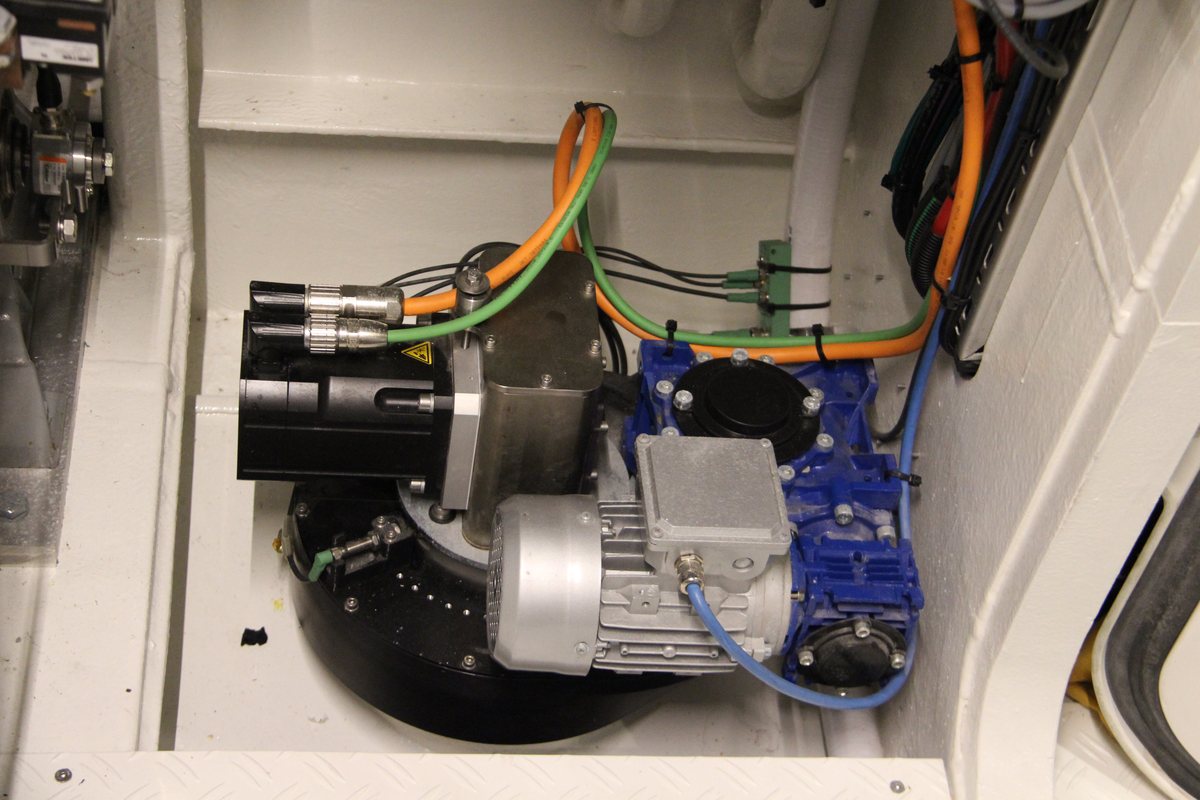
Rotor ZeroSpeed is patented. Until this point, rotors worked while the yacht was moving. ZeroSpeed swings the rotors beneath the hull so they generate their own water flow, which means stabilization at anchor, with no forward motion at all. It remains our single biggest differentiator.
Stabilizing at a standstill2018
Adaptive Rake is patented. The rotors automatically adjust their angle as speed rises, holding stability up to 16 knots without retracting, while minimizing drag to preserve speed and reduce fuel consumption.
2019
New management, new home. The company moves to its current facility in Nuth, in Limburg, and RotorSwing Marine becomes RotorSwing.
Since then
the range widens. Fin stabilizers join the rotors, in both Underway and ZeroSpeed configurations, drawing on more than twenty-five years of experience in marine fin stabilization. In 2026 the yacht length range is scaled up from 35 to 40 meters, and development begins on the RS 170 for larger displacements.