Yacht stabilization systems: rotor, fin, or retrofit.
RotorSwing builds 100% electric stabilization for motor yachts from 12 to 40 meters: Magnus-effect rotors for displacement and semi-displacement hulls, electric fins for higher speed vessels, and a refit path for systems already on board. Every system comes in an Underway version, and an Underway + ZeroSpeed version for comfort at anchor too.
A yacht stabilization system reduces a yacht's rolling motion using actively controlled underwater equipment, most commonly spinning rotors or adjustable fins. RotorSwing builds 100% electric rotor and fin stabilization systems for motor yachts from 12 to 40 meters, in Underway and Underway + ZeroSpeed configurations.
Every yacht rolls differently, and every owner wants something slightly different from a stabilizer. Some care most about a smooth passage, others about a still, quiet night at anchor. Rather than one system trying to do everything, RotorSwing builds three distinct platforms, each engineered for how a particular hull actually moves through (or sits in) the water:
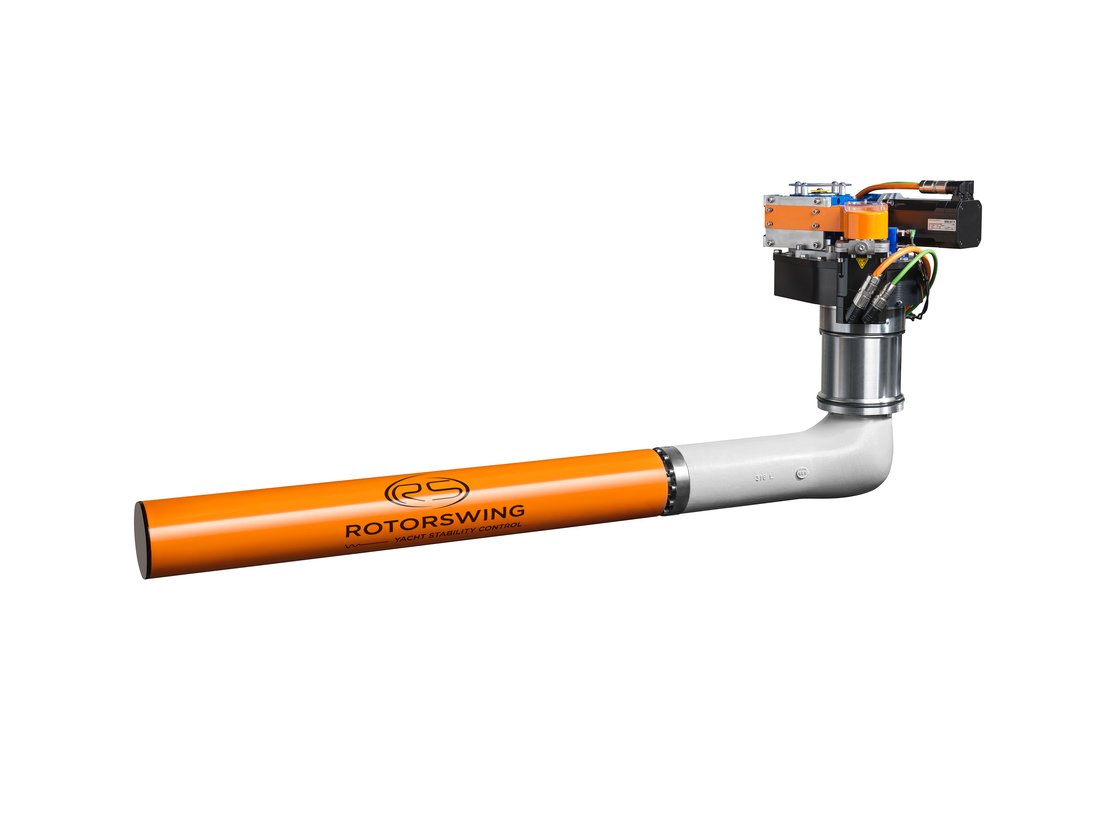
Rotor stabilizers (RS 140 | RS 170):
Magnus-effect rotors for displacement and semi-displacement yachts. Effective from low speeds, and available with ZeroSpeed for stillness at anchor.
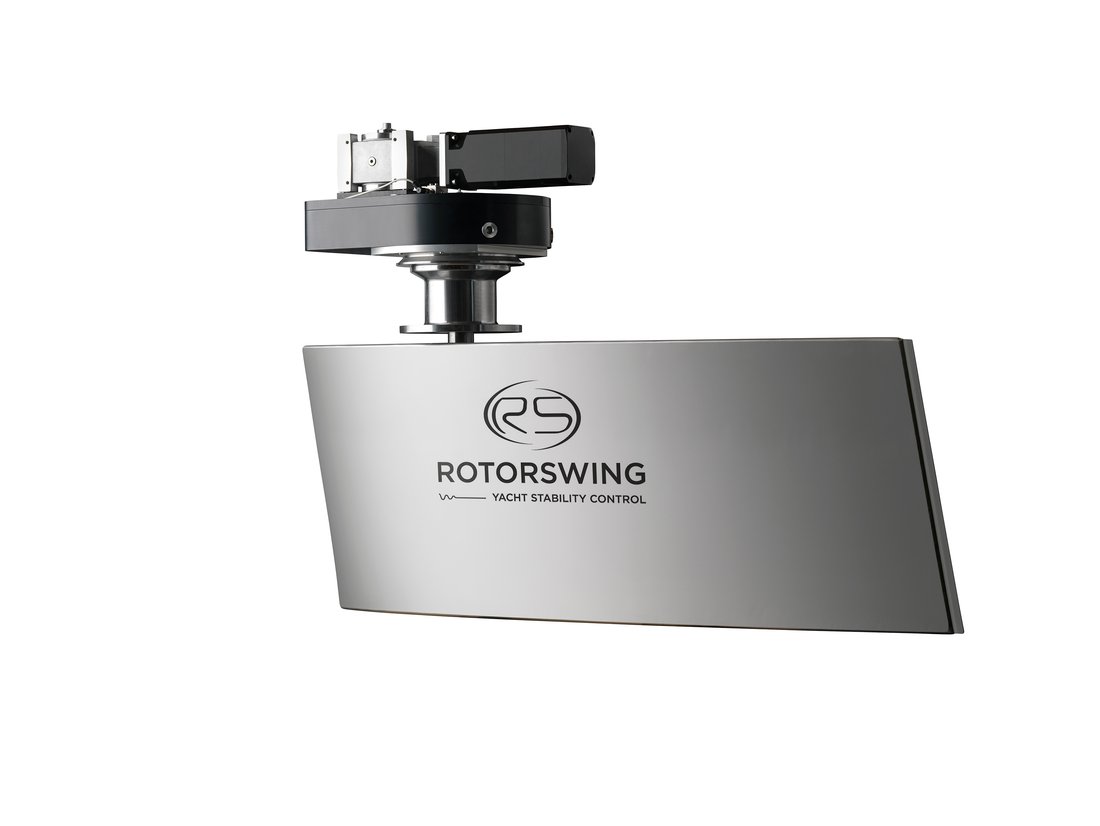
Fin stabilizers (RS E10):
a fully electric fin system built for higher speed vessels and semi-displacement hulls, with the same ZeroSpeed comfort available at anchor.
RS Revive:
a refit and modernization path for yachts that already carry a stabilizer, rotor or otherwise, and want today's control technology without replacing what's still mechanically sound.
Every system is engineered, built, and tested in-house. Nothing is outsourced, and nothing on the water runs on hydraulics.
Rotor or fin: which suits your hull?
The honest answer depends on how you use your yacht more than what you'd prefer to have.
Rotors
work from very low speeds and stay effective right through to a comfortable cruising pace. RotorSwing's Adaptive Rake function keeps them performing up to 16 knots while minimizing drag to preserve speed and reduce fuel consumption. They're the natural fit for displacement and semi-displacement yachts: trawlers, explorer yachts, and anything built to cover distance steadily rather than plane.
come into their own at higher speeds, on faster motor yachts and semi-displacement hulls where a rotor's low-speed strength matters less than sustained performance underway.
Rotors from very low speeds up to 16 knots, fins at higher speeds
Some owners choose both: rotors for ZeroSpeed at anchor, fins for stability while running, for comfort across the full range of how they actually use the yacht. It's not a compromise; the two technologies are simply solving different problems, and both can be combined on the same yacht in a single installation.
Underway or ZeroSpeed: what each mode means
Every RotorSwing system is available in two configurations:
Underway:
roll damping while the yacht is moving, from 3 knots up through cruising speed. This is the foundation every system starts with.
Underway + ZeroSpeed:
everything Underway offers, plus ZeroSpeed technology that continues to stabilize the yacht when at anchor, drifting, or waiting out weather. For owners who spend time at anchor, the Mediterranean especially, this is where a stabilizer earns its keep twice over.
Magnus-effect rotor stabilization for displacement and semi-displacement yachts. A single rotor, port or starboard, is enough for displacements up to 18 tons. Larger yachts can be equipped with multiple RS 140 rotors, while heavier vessels can step up to the RS 170 for the same stabilizing performance with fewer units. Fully retractable, no steering effect, and flexible enough to install anywhere from midships to 1.5 meters forward of the transom, a clear advantage on refits where engine rooms, tanks, and existing systems leave little room to work with.
A fully electric fin system for higher speed vessels, built on RotorSwing's fin-stabilization heritage. Fins range from 0.7–2.0 m² depending on the yacht, with 360° blade rotation that also helps prevent anchor-walking. Removable fin blades keep servicing straightforward.
Already have a stabilizer? RS Revive modernizes the control technology, sensors, and software of an existing system (RotorSwing or otherwise) without replacing hardware that's still mechanically sound and without intensive hull work. The most cost-efficient way to bring an older system up to today's standard.
Every RotorSwing system starts with a straightforward conversation about your yacht: length, displacement, hull type, and how you use the water. Tell us the details and we'll recommend the system that suits it, whatever size that turns out to be.
As the original inventors who brought the Magnus effect to the yachting world, and with over 25 years of experience in marine fin stabilization behind the team, RotorSwing has spent that time in Nuth, the Netherlands, perfecting one thing: 100% electric systems that are quiet, oil-free, and built to work in the background. The only thing you notice is the improved onboard comfort.
Full technical specifications for every system are available on request.