Technology · Electric fins
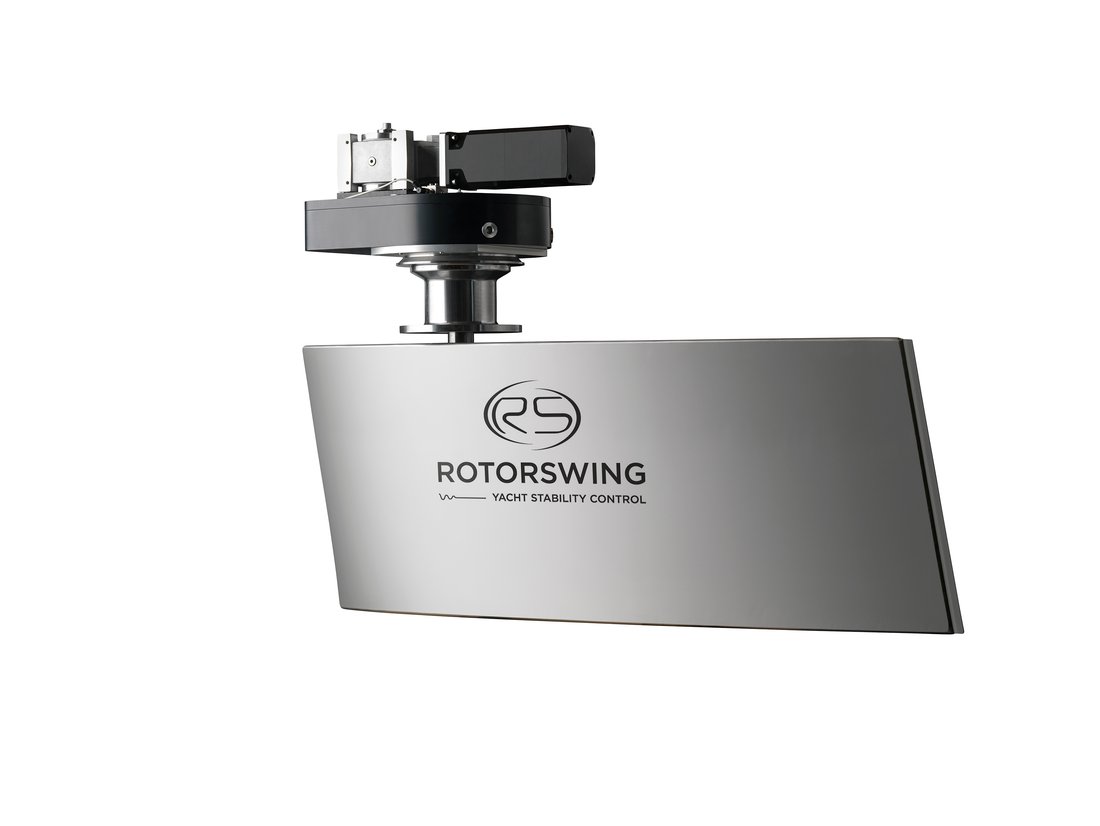
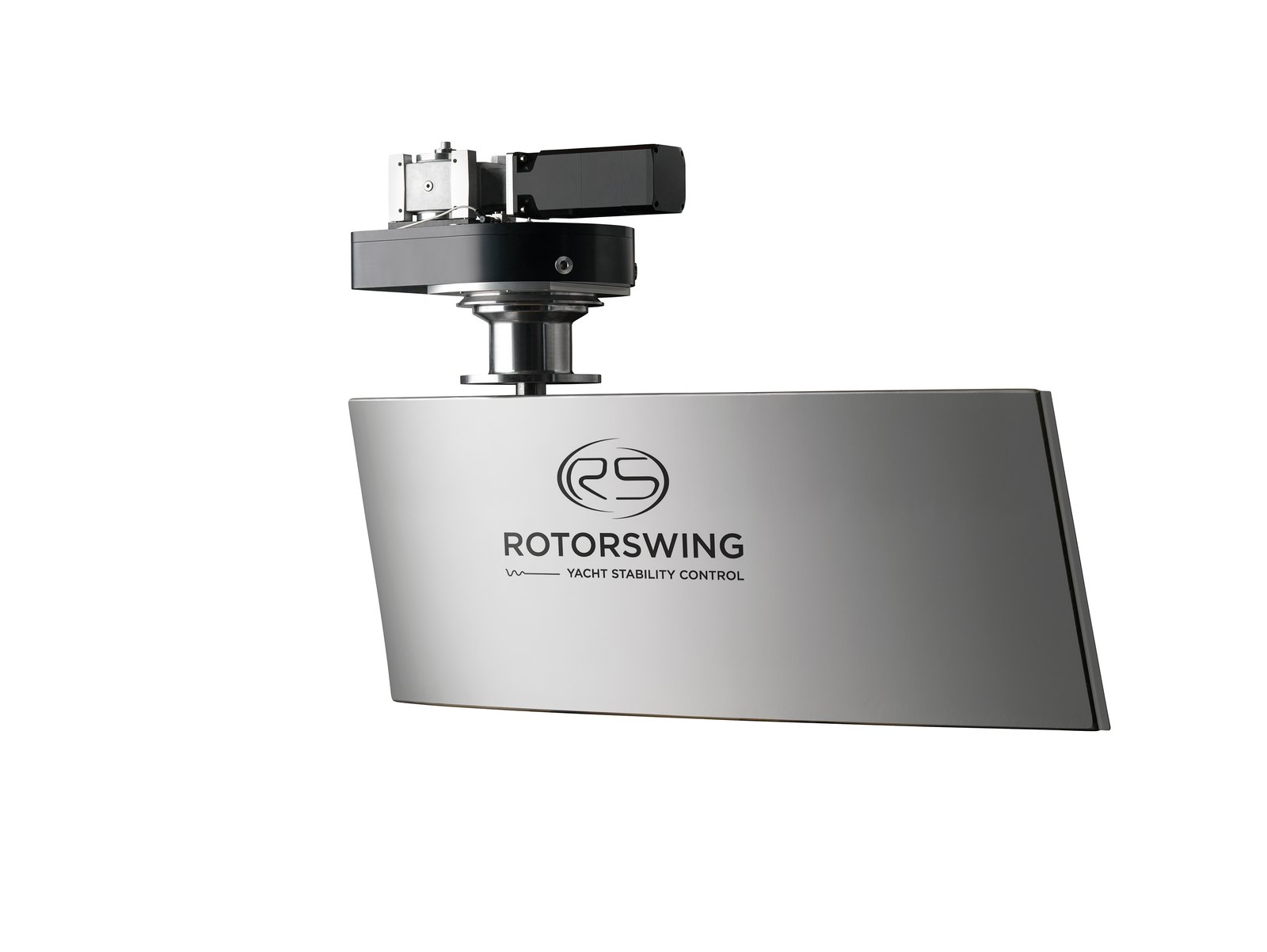
A fin stabilizer is a hydrodynamic fin mounted below the waterline on each side of a yacht, angled continuously by a control system to counteract roll. RotorSwing fin stabilizers are 100% electric, deliver powerful roll damping at cruising speed, and remain effective at ZeroSpeed when the yacht is not moving at all.
Higher cruising speeds ask something different of a stabilizer. The faster the water passes, the more force a fin can turn into calm, and the more the quality of its shape and drive decides what you feel in the saloon. This is where 25 years of fin experience shows.
The purpose is narrow and worth stating plainly: to stop a yacht rolling, without changing anything else about how it handles. Fins do not steer the yacht, they do not lift it, and they are not propulsion. They generate a controlled sideways force that opposes roll, and nothing more.
A stabilizer fin works like a wing in water. As the yacht rolls, the control system continuously adjusts the fin’s angle, so the passing water pushes the hull back toward level. The system corrects as the roll develops, not after it.
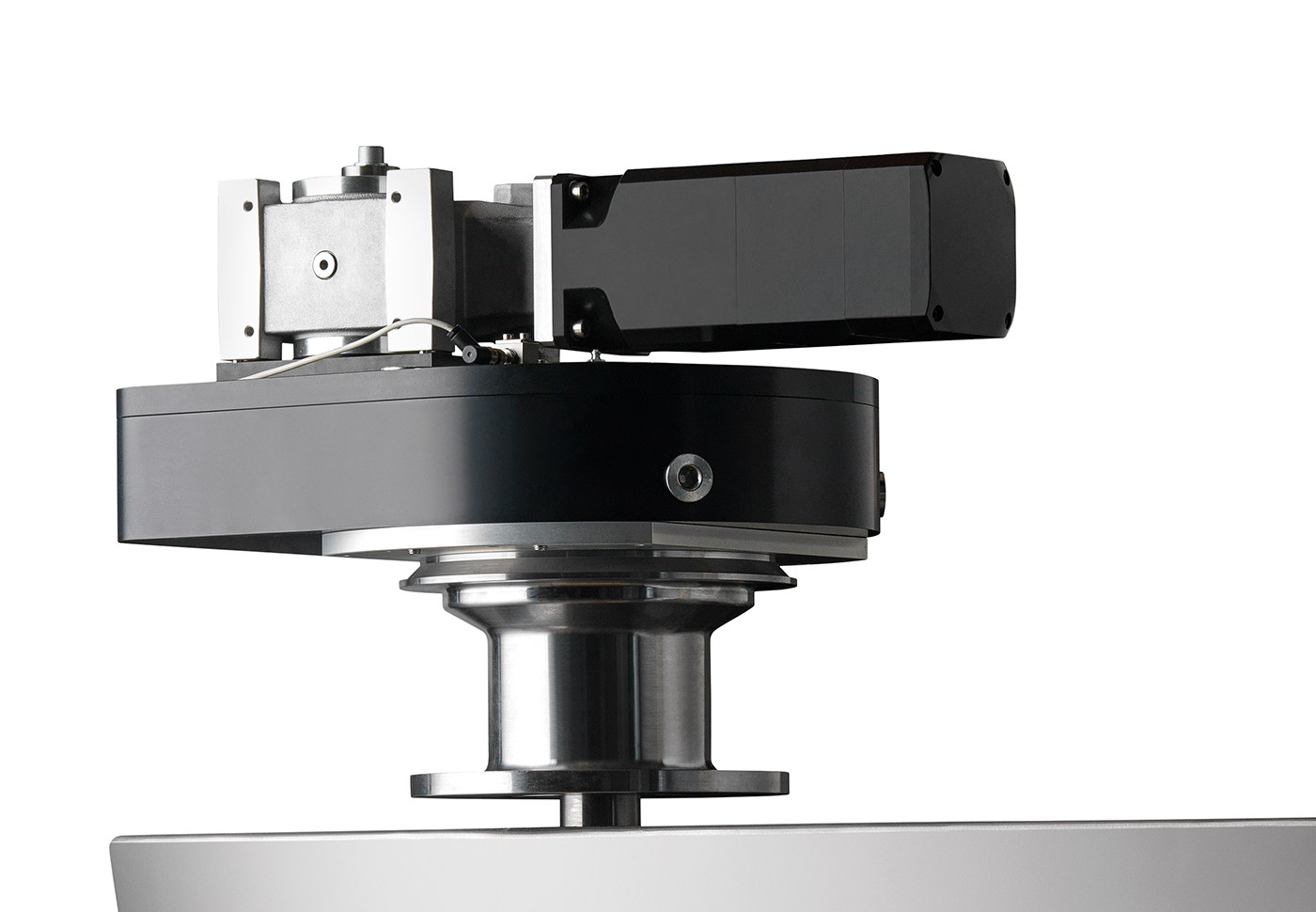
Two things separate a refined fin system from a standard design. The first is the blade itself: RotorSwing fins use an advanced hydrodynamic profile designed to maximize lift and stability. The second is the drive: high-torque technology built around an in-house gearbox, ensuring a precise damping response even when the sea demands rapid corrections.

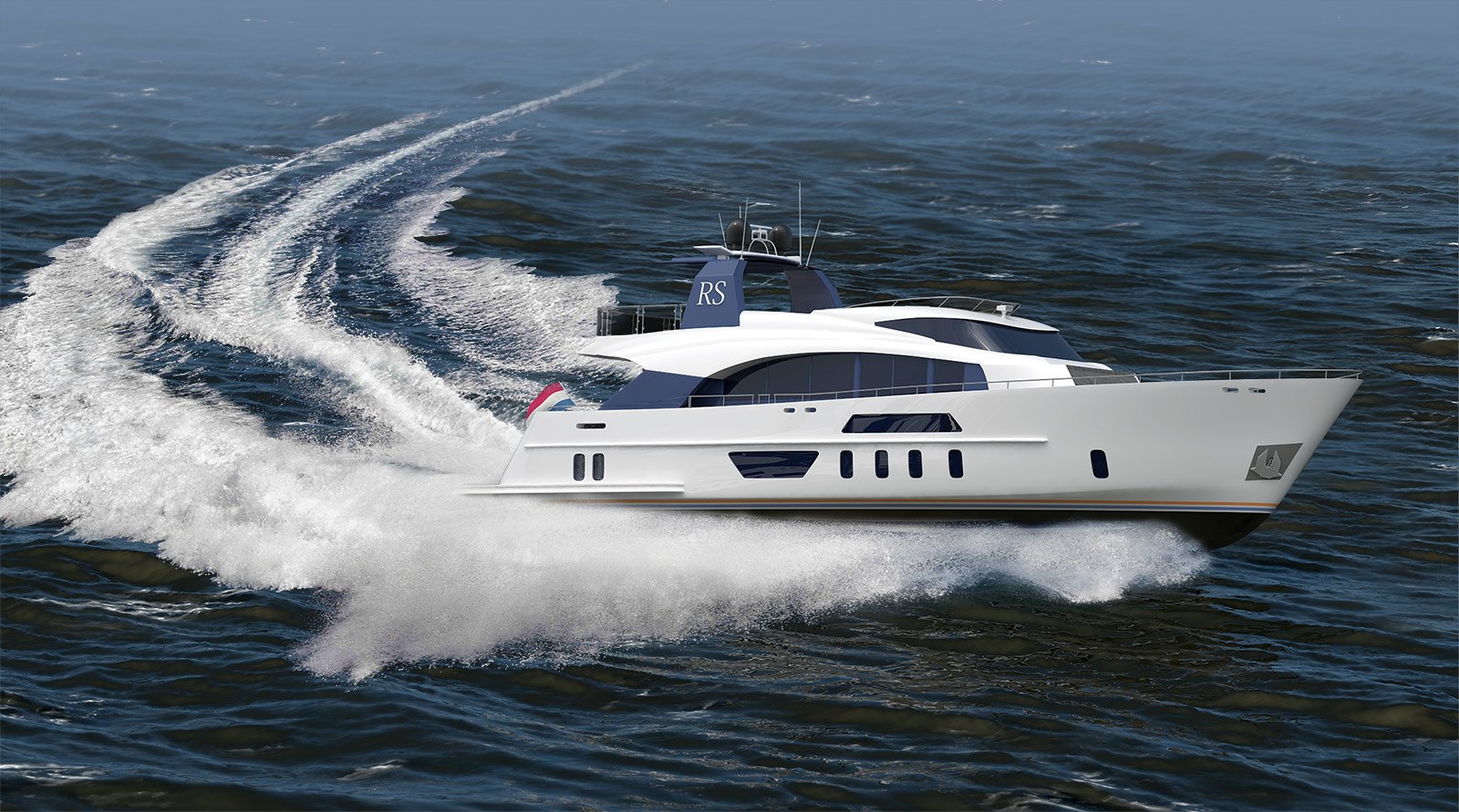
Fins are the natural choice for higher speed vessels. Where rotors are strongest at lower speeds, fins convert higher speed into higher stabilizing force. RotorSwing deliberately publishes no upper speed ceiling: the fins are designed for higher cruising speeds, full stop. For the lower end of the range, rotor stabilization for lower speeds explains the complementary approach.

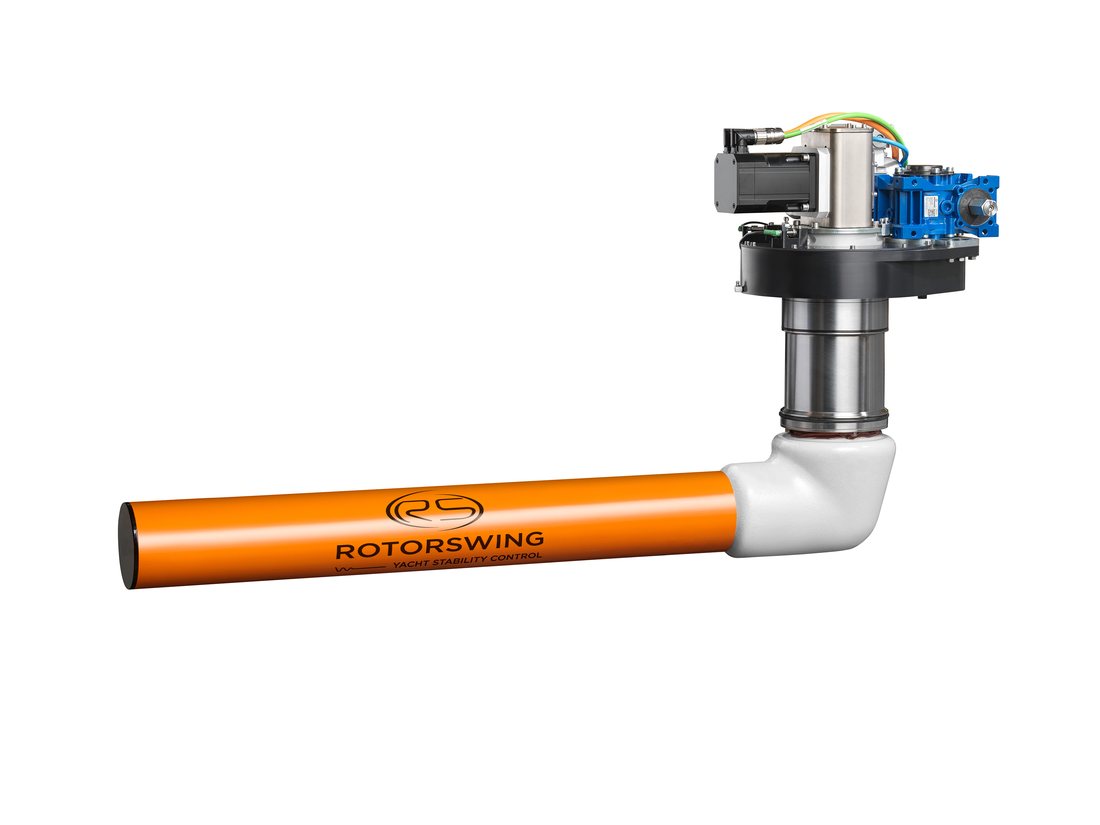
Some stabilization systems depend on the yacht’s forward motion to generate stabilizing force, making them ineffective when stationary. Systems designed for ZeroSpeed operation overcome that limitation by generating their own water flow.
RotorSwing fins are built that way. At ZeroSpeed, the fins generate their own water flow through active rotational movement rather than relying on the yacht’s forward motion, so stabilizing force stays available with no forward motion at all. The same motion helps prevent anchor-walking, so the yacht holds its position instead of wandering around the anchor.
It is the same principle that lets the rotors work at rest: stabilizing a yacht that is not moving.
100% electric. Quiet, clean and oil-free. No hydraulics anywhere in the system.
Low resistance. A streamlined profile keeps drag to a minimum while cruising.
Removable fin blades. A flexible design that simplifies transport, refit and service work.
Range of sizes. Fin blades from 0.7 m² to 2.0 m², matched to the yacht during specification.
Energy efficient. Minimal power consumption, by design.
Fins and rotors are not rivals within RotorSwing; they are two answers to different profiles. For yachts that want maximum stabilization at speed and maximum comfort at anchor, both can be combined in a single installation: fins take the high-speed work, rotors deliver the ZeroSpeed and slow-cruising performance.


Building on 25 years of expertise in fin stabilization, and as the people who design, build and test every system in-house in Nuth, we specify that balance yacht by yacht rather than selling one answer to every owner.
The product this page describes in the flesh: the RS E10 fin stabilizer, available as Underway or Underway + ZeroSpeed. And for the wider picture of how the technologies fit together: the complete technology overview.
Whether your yacht calls for fins, rotors or both comes down to hull, speed and cruising style. Answer a few questions and get a personal recommendation, reviewed by a RotorSwing engineer. Free and without obligation.
Find the Right Stabilizer