Technology · Magnus-effect rotors
The Magnus effect is the sideways force generated by a spinning object as it moves through a fluid, whether that fluid is air or water. It is why a spinning football curves in flight, and it is what allows a spinning rotor under a yacht to produce a powerful, instant stabilizing force.
A spinning object drags the fluid around it as it moves. On one side, the surface turns in the same direction as the oncoming flow and speeds that flow up. On the opposite side, the surface turns against the flow and slows it down.
Bernoulli’s principle explains what happens next: faster-moving fluid exerts lower pressure, slower fluid exerts higher pressure. The object is pushed from the high-pressure side toward the low-pressure side. Seen the other way round, by Newton’s third law, the object deflects fluid in one direction and the fluid pushes back with equal force in the other.
The result is a force acting at right angles to the direction of travel. It is the same physics whether the object is a golf ball in air or a cylinder in water, because both are fluids. Water is roughly 800 times denser than air, which is why a rotor in water can generate so much force from a relatively small cylinder.

1852
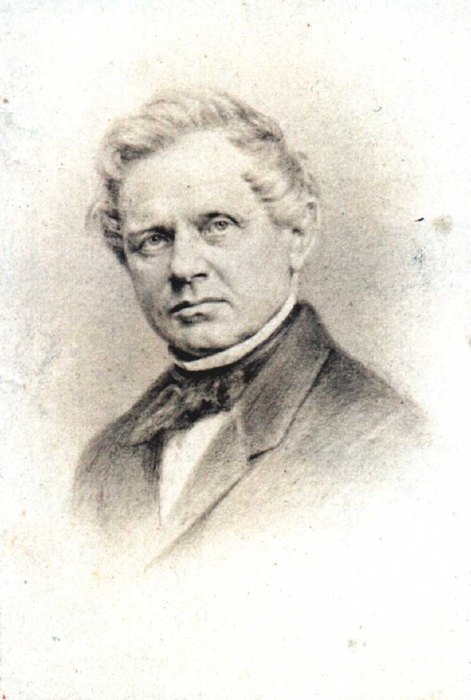
The effect is named after Heinrich Gustav Magnus, the German physicist who demonstrated it in 1852 with a rapidly spinning brass cylinder in a stream of air. Newton had described the same behaviour as early as 1672, but Magnus was the first to isolate it in the laboratory, and the name stuck.
Most people have seen the Magnus effect without naming it: the sidespin that bends a free kick around a wall, the backspin that keeps a golf ball in the air longer. Same force in every case. Only the medium and the scale change.

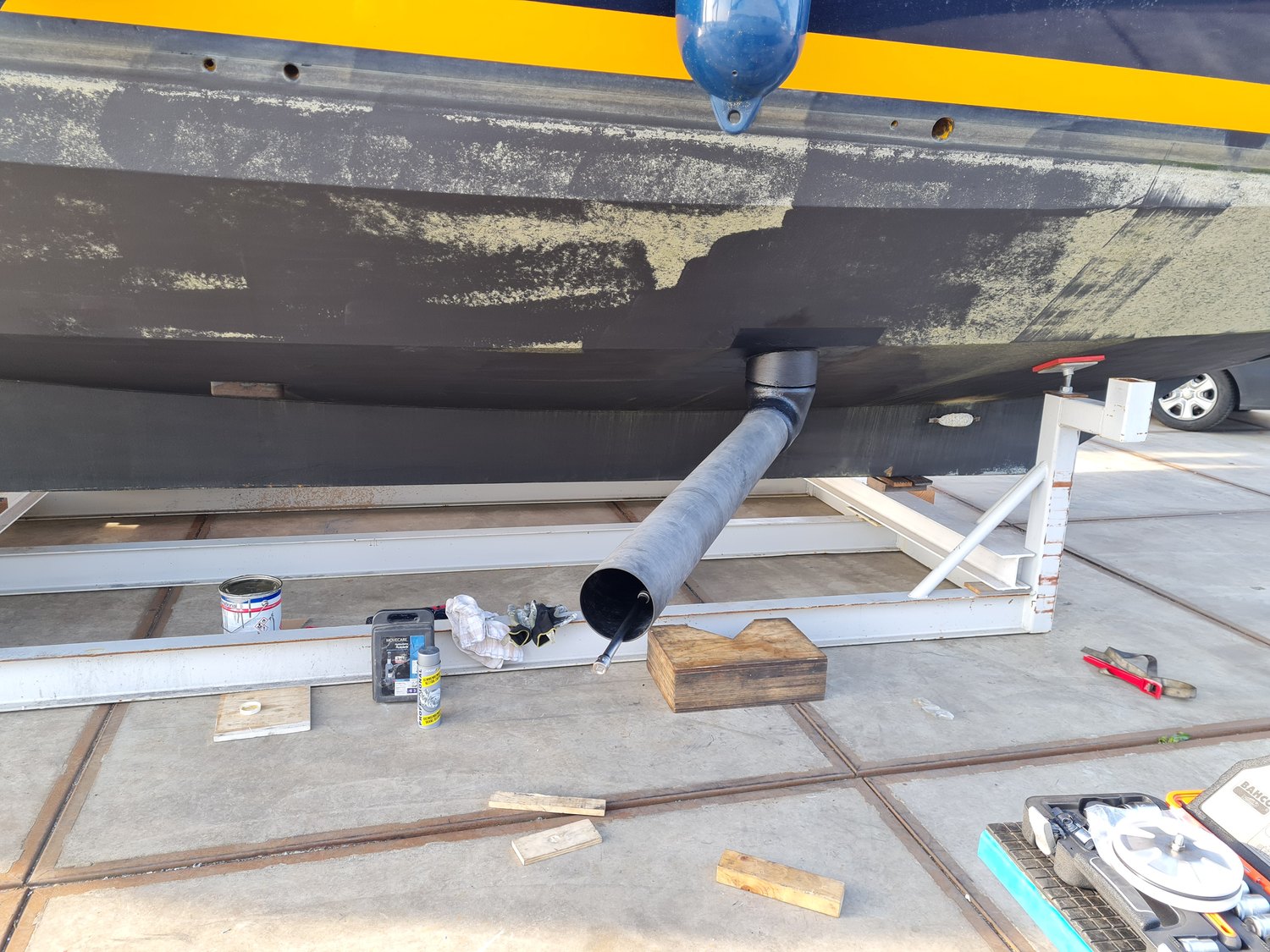
In water, the Magnus effect stops being a curiosity and becomes useful engineering. A cylinder spinning in a passing flow produces a strong, controllable force at right angles to that flow. Point that force up and down instead of sideways, put a pair of them under a hull, and you can push directly against a yacht’s roll.
That is what a Magnus-effect stabilizer is. As the rotor spins, it speeds up the water on one side and slows it on the other. The resulting pressure difference creates a stabilizing force that acts directly on the hull. The result is instant stabilization.
The control system continuously measures the yacht’s roll motion, including roll angle and roll velocity, and directs the rotors so that the generated force always opposes the roll. There is no spin-up and no lag: the moment the rotors spin, the force is there. Understanding the motion being corrected helps here: why yachts roll in the first place.
And because the rotor works out in the water rather than inside the hull, stabilizing force is available against waves from any direction, including the following seas that arrive from astern. That matters more than it sounds: waves from behind are exactly the ones that make a saloon uncomfortable on a long passage.
A point of confusion worth clearing up, because both use the same physics on ships.
Flettner rotors are tall spinning cylinders mounted on deck. They work in air, using crosswinds to generate forward thrust, and they exist to help propel a ship and cut fuel use.
Magnus-effect stabilizers are underwater. They work against the passing water, and they exist to stop a yacht rolling, not to move it forward.
Same principle, opposite medium, entirely different job.
Magnus force comes from the difference between the rotor’s spin and the surrounding flow, and that has a consequence owners care about: it works at low speed. RotorSwing rotors deliver powerful roll damping starting at just 3 knots, exactly where displacement yachts spend most of their time and where many other approaches are weakest.
It does not stop when you do. In ZeroSpeed configuration the rotors swing beneath the hull and generate their own flow, so stabilization continues with no forward motion at all. Stabilization with zero forward motion covers the mechanism in full.
At the top of the range, drag would normally be the rotor’s price. RotorSwing solved that with the patented Adaptive Rake function, which automatically angles the rotor to cut drag and power consumption while stabilization keeps working, up to 16 knots.

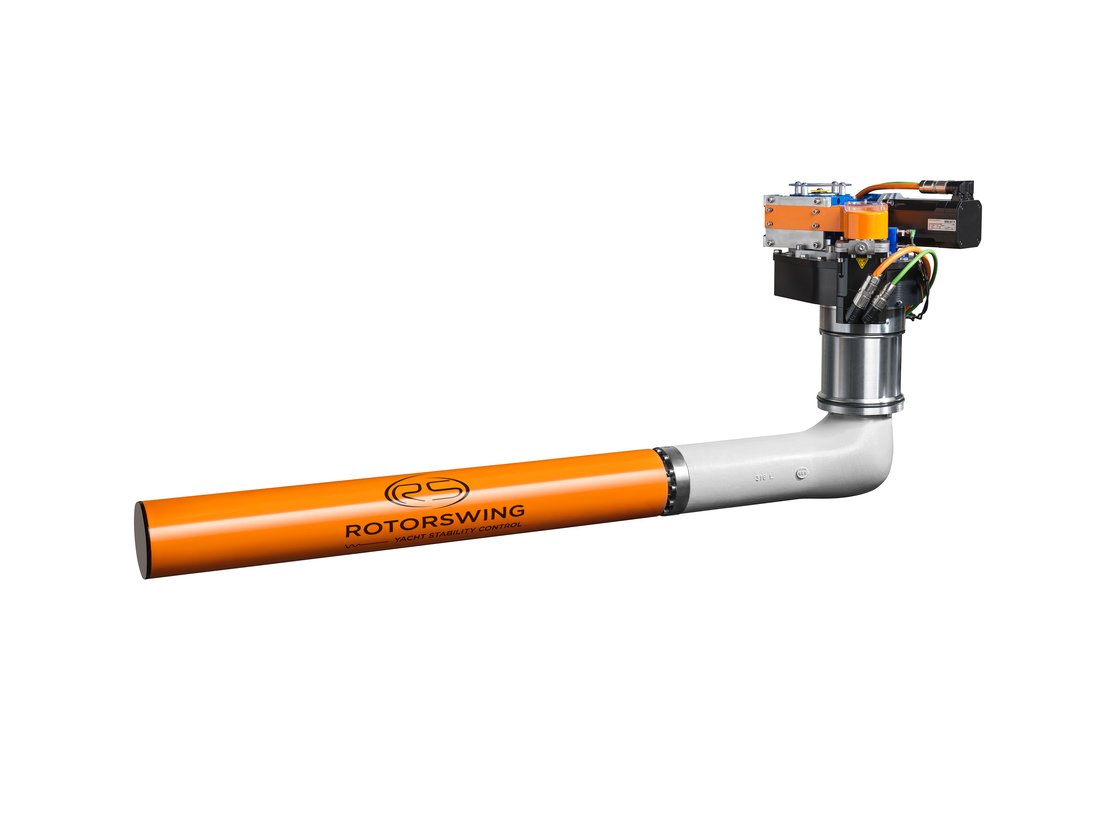
As the original inventors who brought the Magnus effect to the yachting world, we have perfected the art of stability through modern engineering. The physics is more than a century old. Making it live under a yacht is the actual work: fully retractable rotors for zero drag when retracted, and safe docking, break-away safety bolts that protect against heavy impact, and no steering effect, so the yacht holds a perfectly straight course while the system runs.
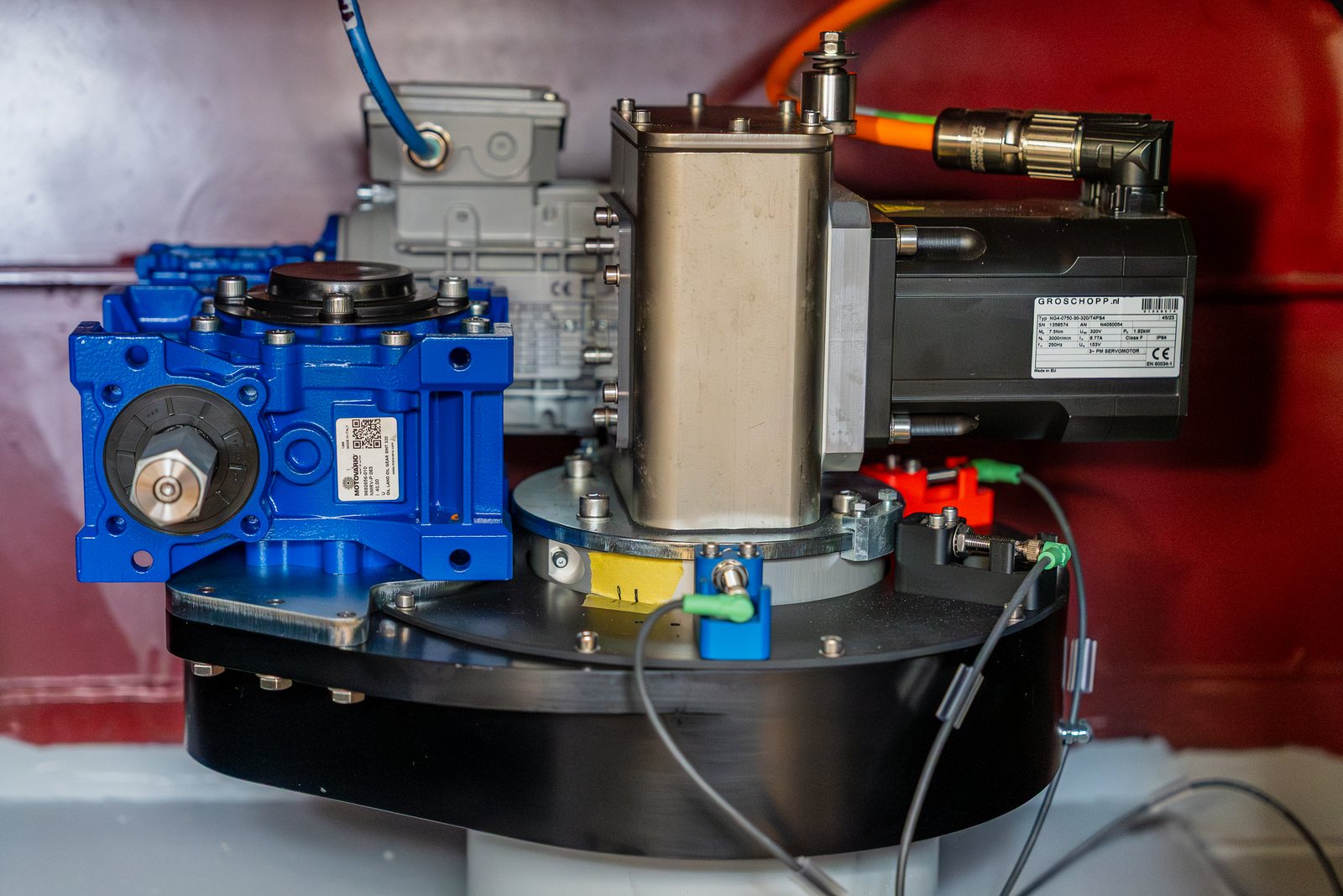
All of it is delivered by the RS 140 rotor system, 100% electric, quiet and oil-free, with flexible placement from midships to 1.5 meters forward of the transom. That placement freedom is why rotors so often fit refit projects where other systems practically no longer do.
For yachts that cruise fast, the same platform offers a second path: how fin stabilization compares.

Magnus-effect stabilization is not limited to one hull material. When John and Julie fitted their Grand Banks 42, a GRP yacht based in Menton, Marc Wachelder traveled out personally to assess the installation on board.
“The results were simply amazing.”
Rotors are one pillar of the full technology platform. Whether they are the right answer for your yacht depends on hull, speed and how you actually use it. Tell us those three things and a RotorSwing engineer will tell you honestly: which stabilizer suits your yacht. Free, about two minutes.
Find the Right Stabilizer