Skip to content
11 owner testimonialsread them all

For refit yards

The Stabilizer That Fits the Yacht You Actually Have

Refits are won and lost on space. Existing yachts are already full: tanks, generators, machinery rooms, piping. Fin stabilizers typically need to be installed close to midships, and midships is exactly where that space has already gone. Our rotors don't have to sit there.

RotorSwing rotor stabilizers can be installed anywhere from midships to 1.5 meters forward of the transom. Fin stabilizers typically need to be installed close to midships, so this placement freedom makes a refit not only possible but often far simpler on yachts where that space is already taken.

The refit process, step by step

Every refit starts with a technical inspection of the yacht and the available installation space. From there we determine the most suitable configuration and the optimal position. The work itself typically consists of:

  1. Assessment of the existing situation

  2. Structural modifications and welding for the hull penetrations

  3. Installation of the stabilizers

  4. Cabling and required systems

  5. Integration of controls and electronics

  6. Commissioning, tuning, sea trial and handover

Lead time depends on the system type, a one- or two-rotor configuration, the presence of existing weld bushings or structural preparations, and the yacht's specific layout. We scope it per project rather than promising a number that fits nobody.

Why the placement freedom matters to a yard

Why rotors are not tied to midships is a physics story, but the yard version is short: because there is no steering effect, the rotors mount anywhere from midships to 1.5 meters forward of the transom. That turns "no room" into a planning question, and it's the reason several of our best-documented projects are refits.
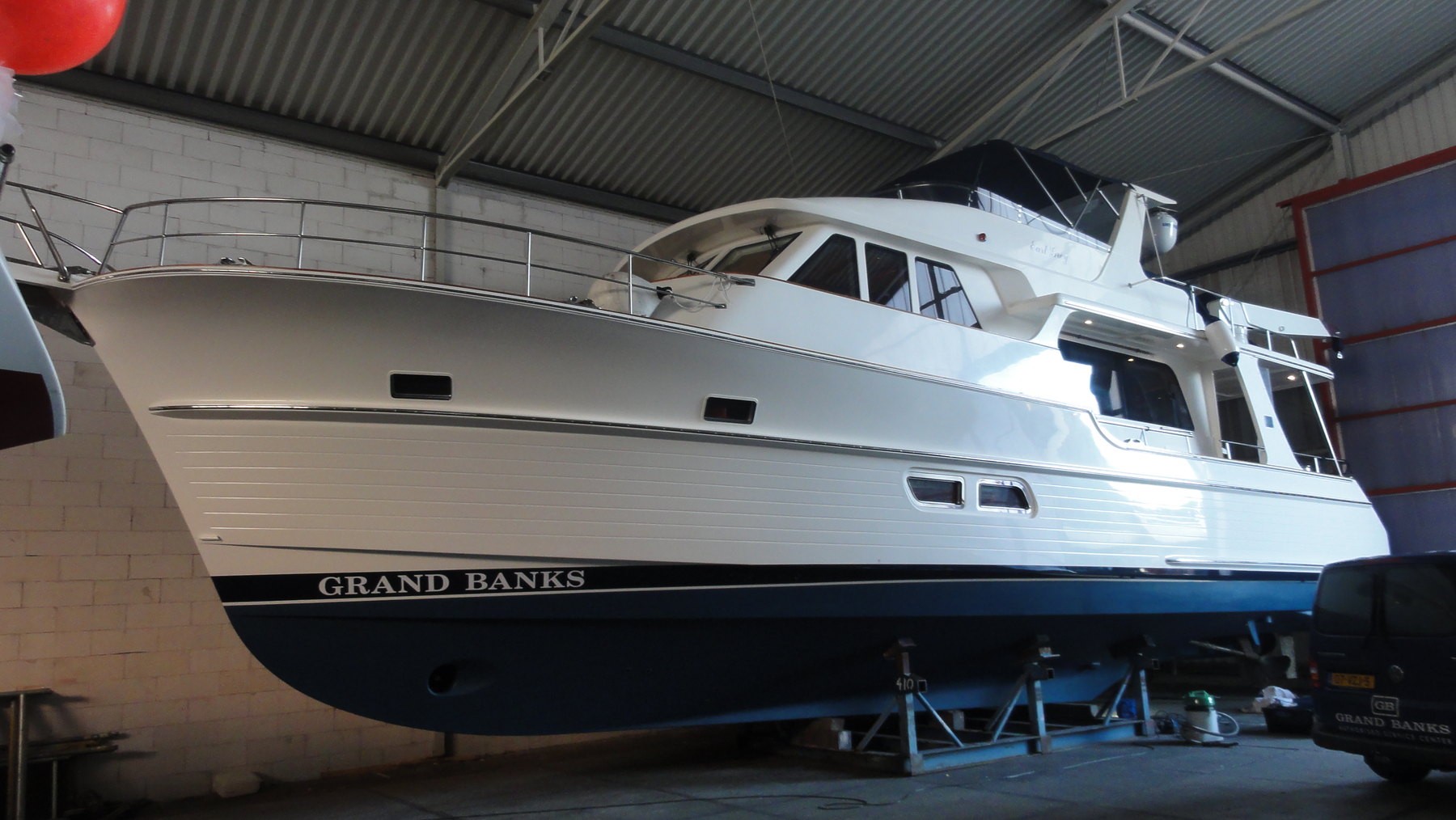
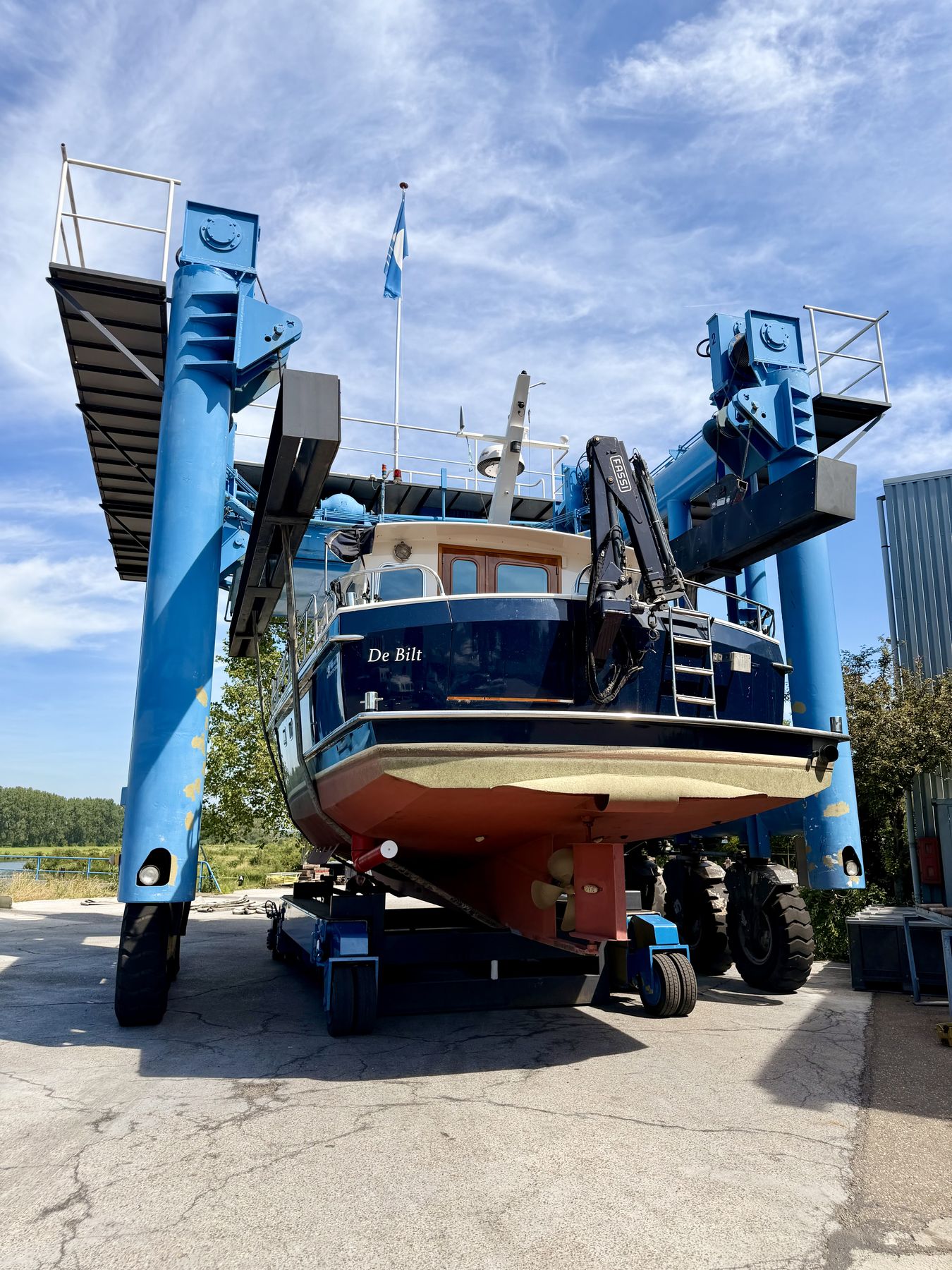
A white motor yacht with a dark blue hull standing on keel blocks and stands inside a covered yard shed, hauled out for work

Factory behind you, start to finish

Design, production and testing all happen in-house in Nuth, and the same engineers support your installation: inspection, positioning, structural advice, commissioning and the sea trial. New-build work runs through our shipyard collaboration; independent specifiers through the naval-architect route.

Send us the yacht's layout and what it carries, and we'll tell you honestly whether a refit fits, where, and what it involves. Discuss a refit directly with the factory.